
History
Scroll down to discover more about our illustrious history and our origins

Over 600 years of illustrious history and a legacy of words and ideas…
We champion the Communications and Content industries, connect leaders across publishing, printing and digital media, and support education and charitable causes that inspire the next generation.
The Mistery or Art of a Stationer of the City of London
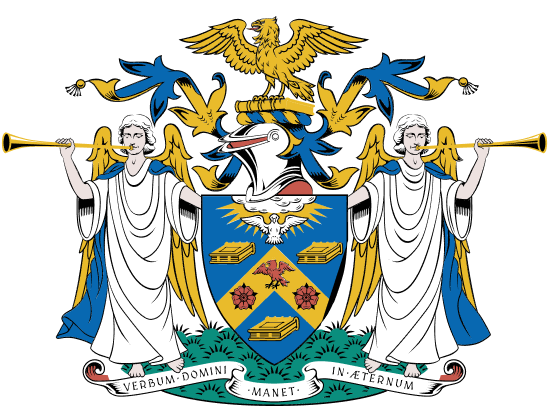
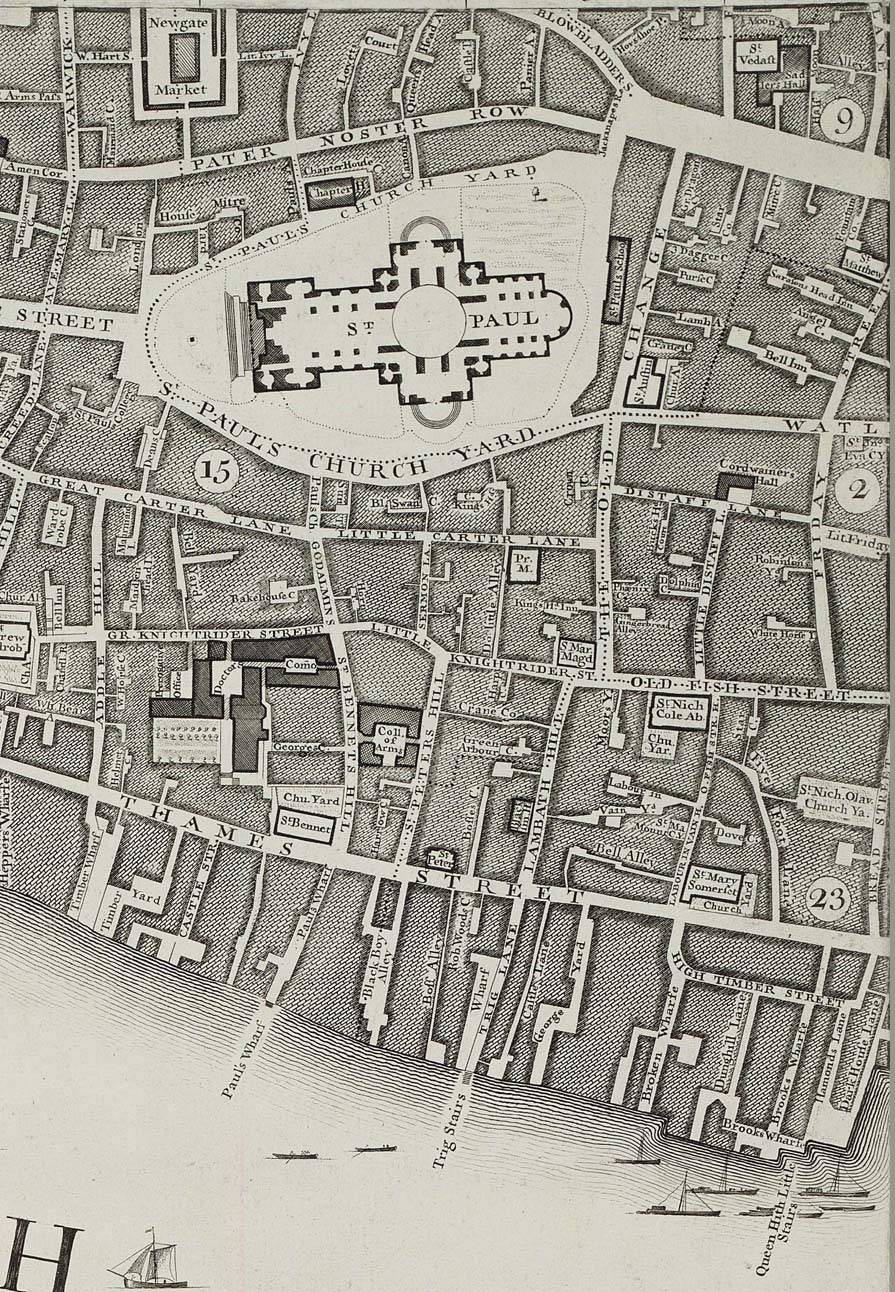
In 1403 the Mayor and Aldermen of the City of London approved the formation of a fraternity or Guild of Stationers, representing workers in the book trades. Members included booksellers who copied and sold manuscript books, limners who decorated them, suppliers of writing materials and book-binders.
Many set up stalls, or ‘stations’ around St Paul’s Cathedral, giving the Company its name.
1403
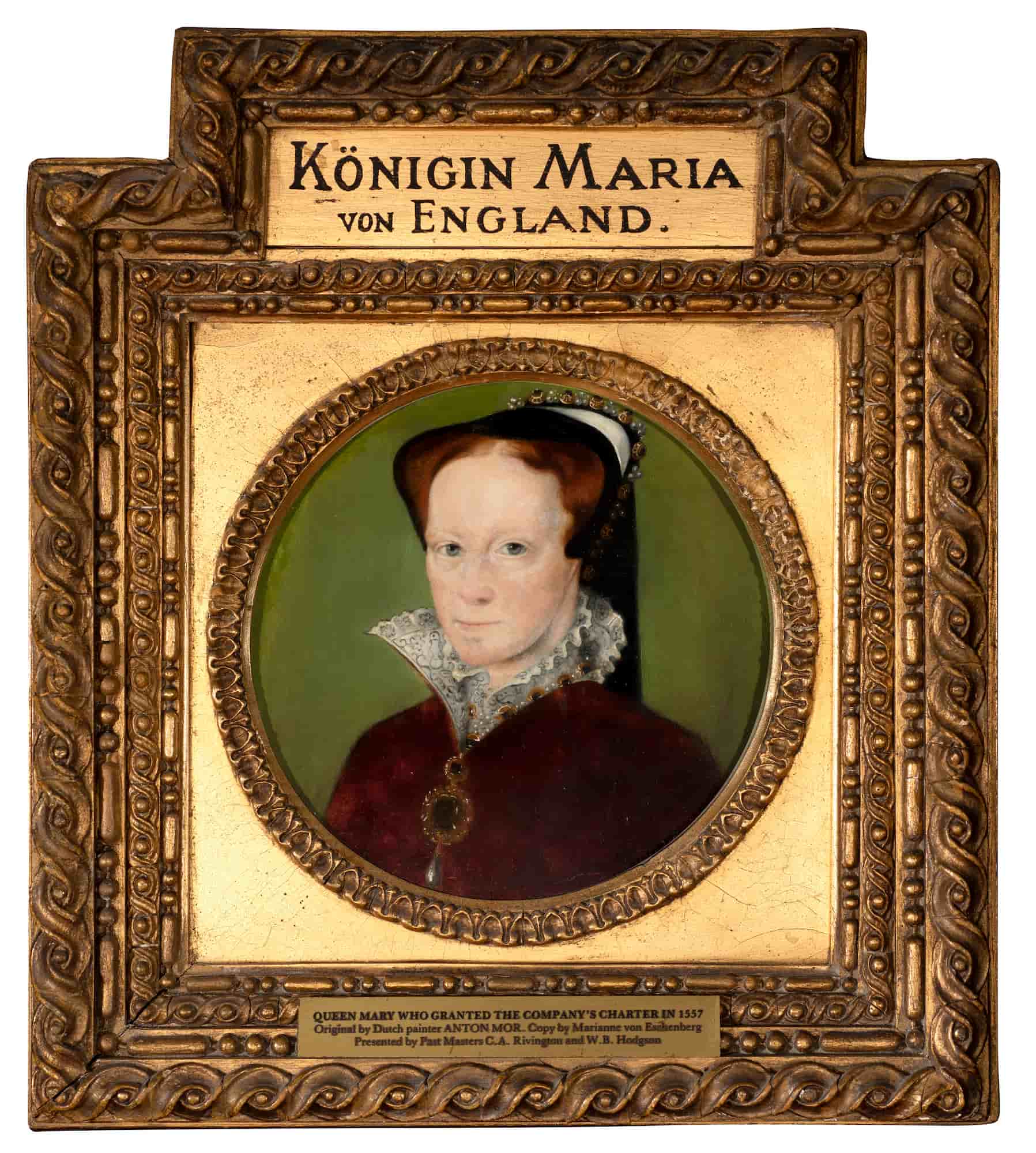
The Stationers' Royal Charter: Caxton’s introduction of the printing press to England in 1476 changed the fortunes of the Stationers’ Company.
Keen to control this potentially subversive new technology, Mary I and Philip II granted the Company a royal Charter in 1557. This gave the Stationers control of printing and publishing, with the right to seize pirated works and register new titles.
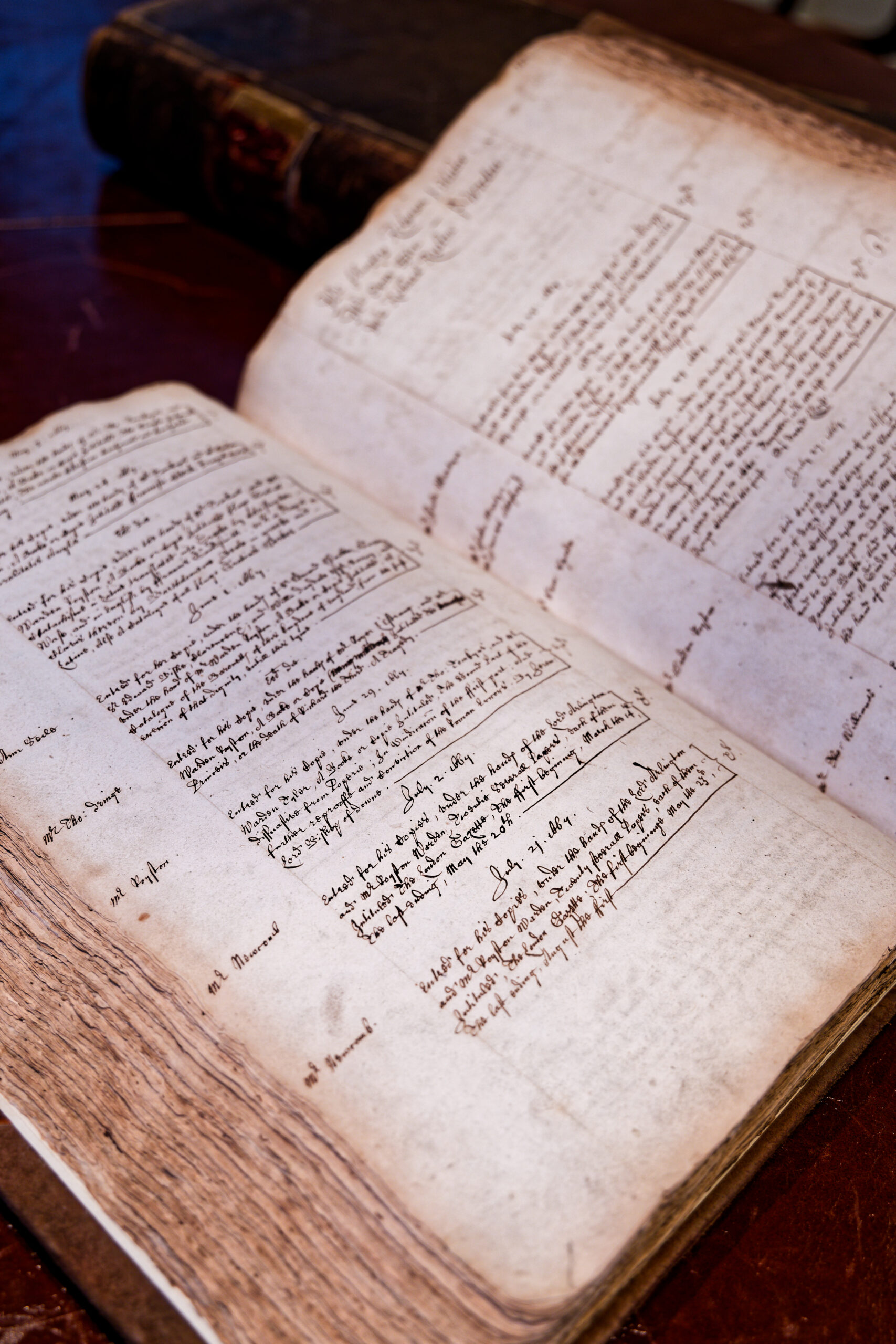
The Stationers’ Register laid the foundations for the development of copyright law. (Image: Portrait of Mary Tudor by Marianne Eschenburg, 1856, after an original painted by Sir Anthonis Mor in 1553/4. Stationers’ Hall collection)
1557
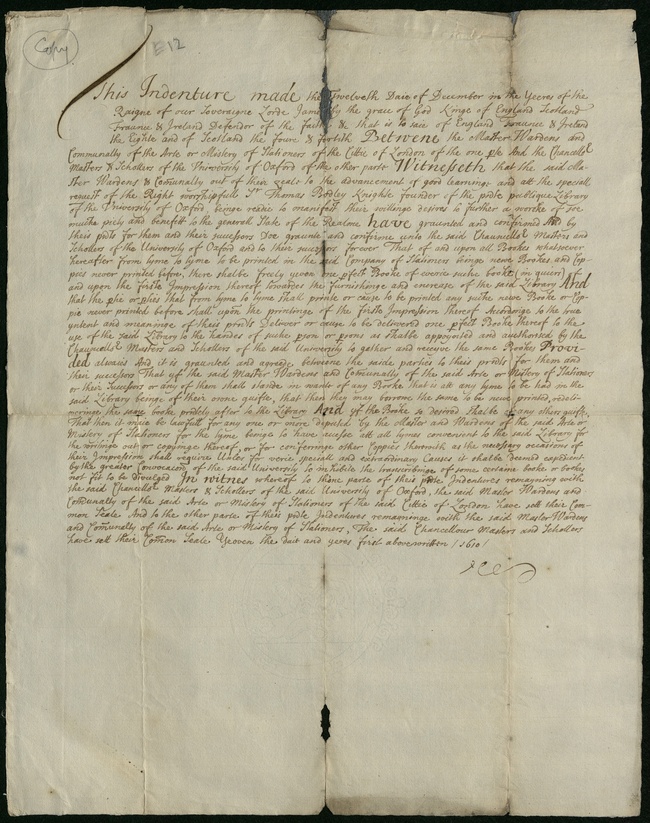
Agreement with the Bodleian Library: On the 12th of December 1610, a milestone agreement was signed between the Stationers' Company and the University of Oxford.
The Stationers undertook, ‘out of their zeale to the advancement of good learning’, to transfer ‘one perfect Booke’ of every title registered by the Company to the library newly established Sir Thomas Bodley. This agreement eventually gave rise to the system of legal deposit subsequently adopted in Britain.
Under this system, a copy of every publication issued in the UK and Ireland must be deposited at designated libraries. Through this, a comprehensive, unbiased record of those nations’ print history has been created. The Bodleian remains one of the core libraries of legal deposit.
1610
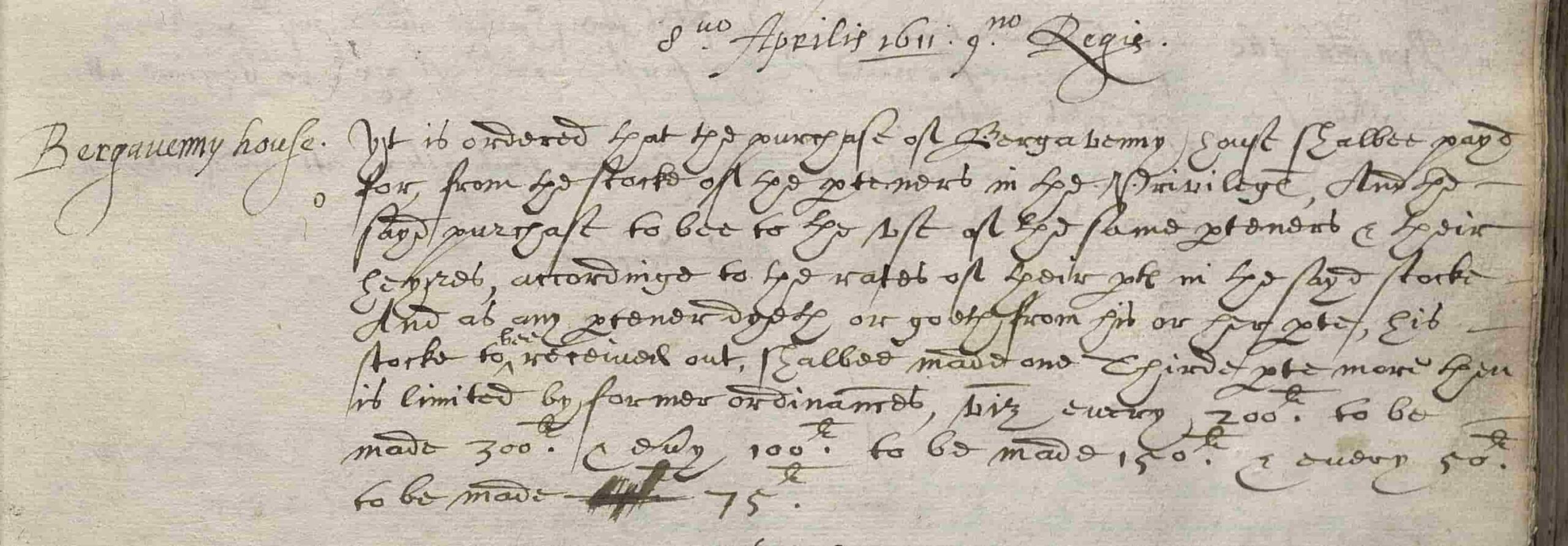
A new Hall for the Stationers: The Stationers’ Company grew rapidly in both membership and influence, and 50 years after receiving their charter, the Stationers needed a new, grander Hall.
In 1611, they completed the purchase of Abergavenny House, London headquarters of the feudal Baronetcy of Bergavenny. This magnificent building entertained courtiers and diplomats over the centuries. Although not the Stationers’ first Hall, its site became their permanent home; the present Stationers’ Hall was rebuilt on the same site.
1611
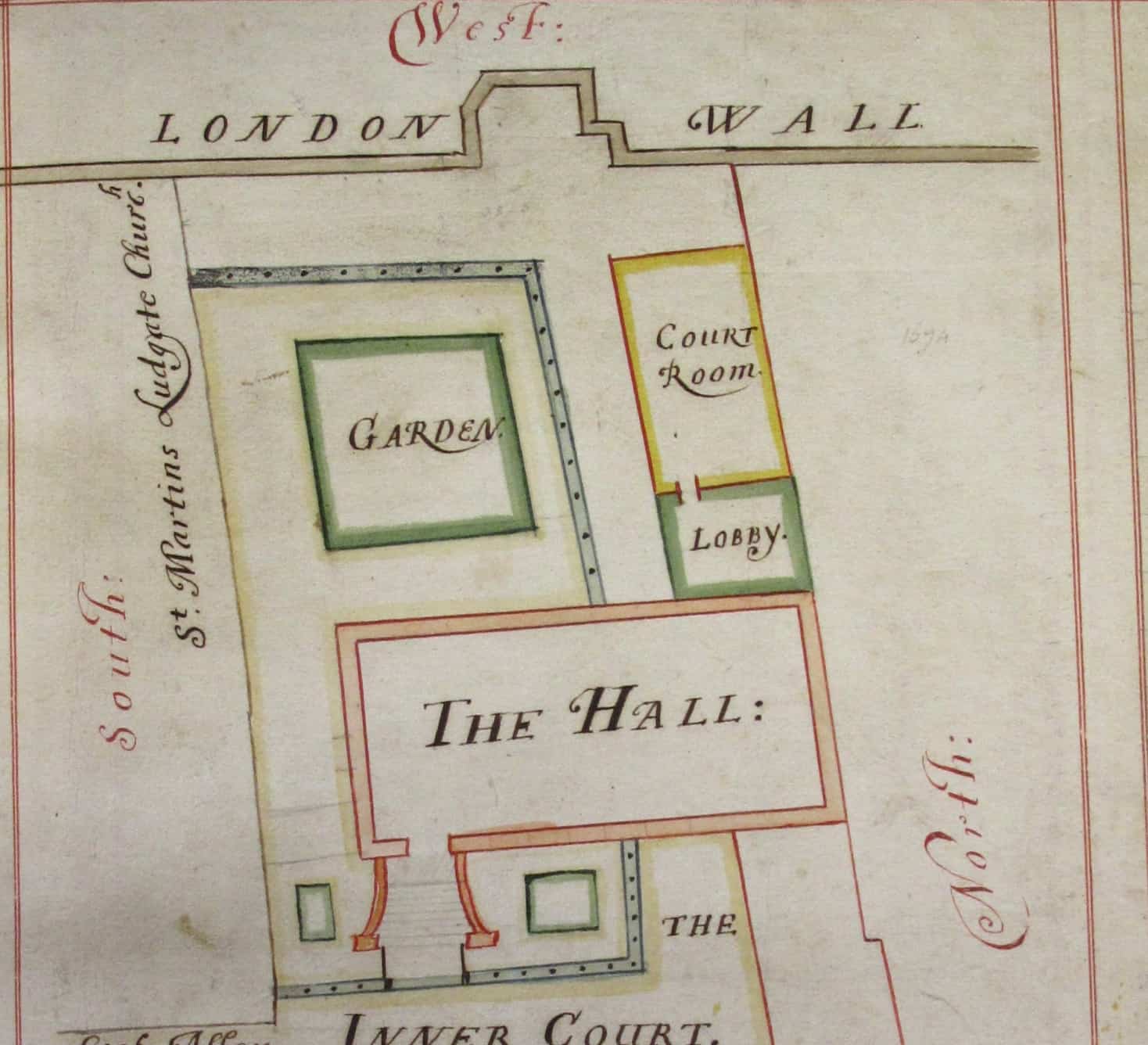
After the Fire: Stationers' Hall rebuilt: Between the second and sixth of September 1666, fire raged through the City of London, destroying thousands of homes, businesses and churches.
Stationers’ Hall was among the buildings razed to the ground, but the Company was quick to start rebuilding on the same site. The Stationers hired William Leybourn (1626-1716) to oversee the rebuilding work.
A highly esteemed mathematician, Leybourn was one of the six surveyors appointed by the Corporation of London to measure the damage caused to the City by the Fire. This page from Leybourn’s survey of the Stationers’ property shows the layout of the Hall rebuilt in 1674.
1674
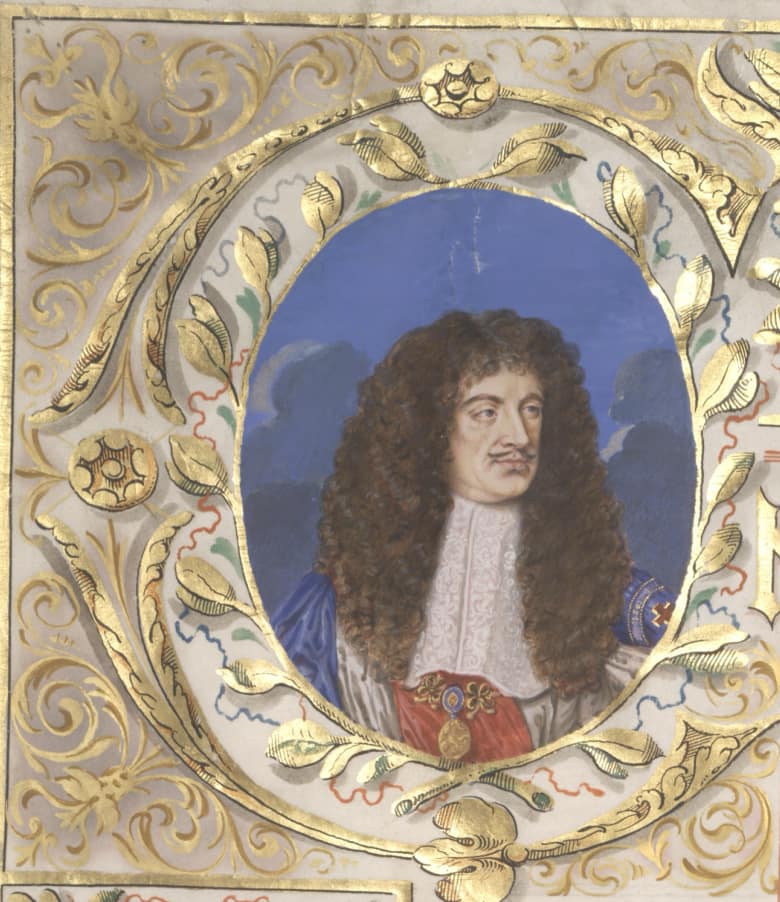
The Stationers and the Restoration: The Stationers received their first Royal Charter in 1557.
However, after the Restoration of the Monarchy in 1661, Charles II set about seizing and regranting borough charters, which extended to the London livery companies.
The reissued charters gave the king power over the appointment of senior corporation officials. Ironically, with 1688’s ‘Glorious Revolution’ sweeping away the vestiges of Stuart control, William and Mary revoked the Charters issued by Charles II, and reissued them in their original form.
1684
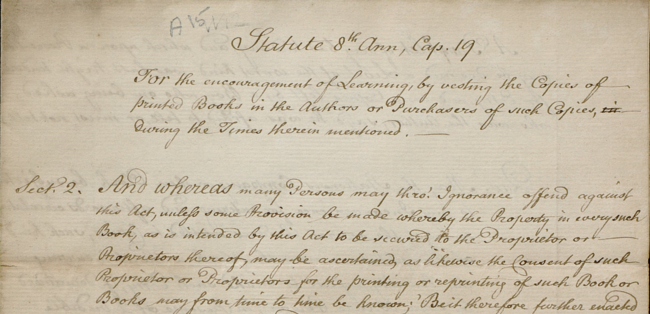
The Statute of Anne: In 1710 the first English copyright statute was passed, often referred to as the Statute of Anne.
Described as an `Act for the Encouragement of learned Men to compose and write useful Books’, it gave the first statutory recognition to the author’s stake in the text.
Under its terms, all books registered with the Stationers’ Company were granted fourteen years’ protection from unauthorised printing, with an additional fourteen years if the author was still living at the expiry of the first term. While the Courts continued to debate the author’s common law right of literary property outside this fourteen-year term, the Statute abolished the idea of perpetual copyright.
1710
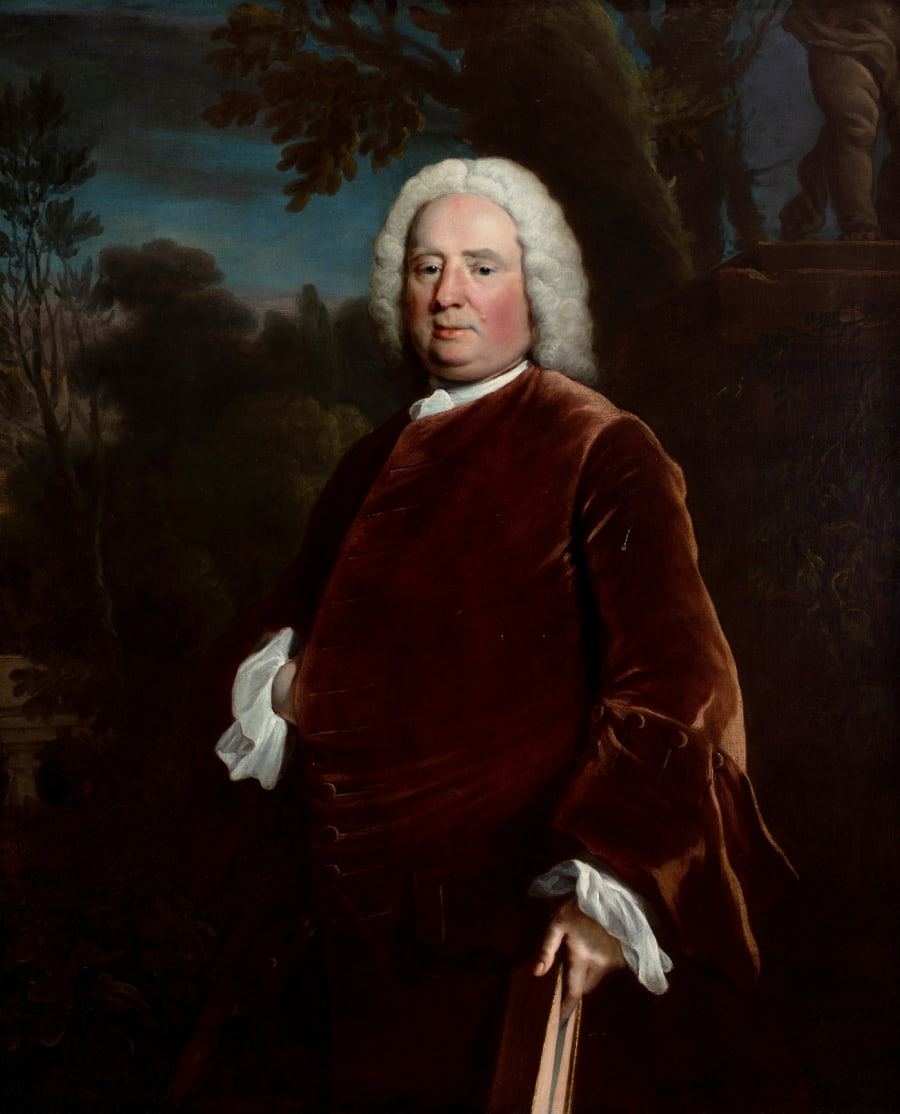
Samuel Richardson: Samuel Richardson, best remembered today as a ground-breaking author, was also a prominent Stationer who served as Master of the Stationers' Company in 1754.
His book Pamela, or Virtue Rewarded, is widely regarded as one of the first novels in the English language. This painting by Joseph Highmore was completed in 1747 and presented to the Company in 1811, along with a companion portrait of Richardson’s second wife Elizabeth Leake. Sadly, Elizabeth’s portrait was destroyed in the 1940 bombing of Stationers’ Hall.
1754
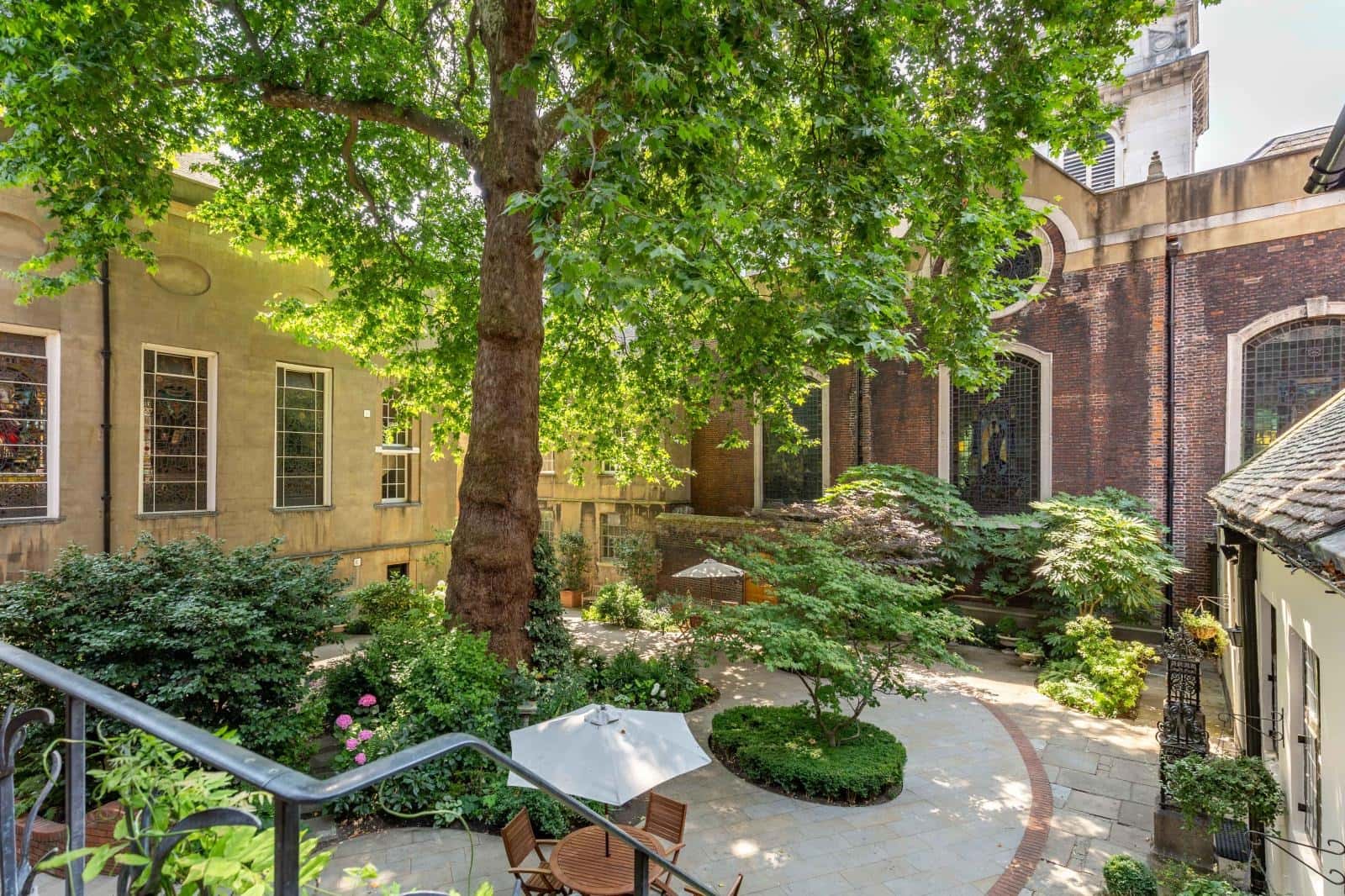
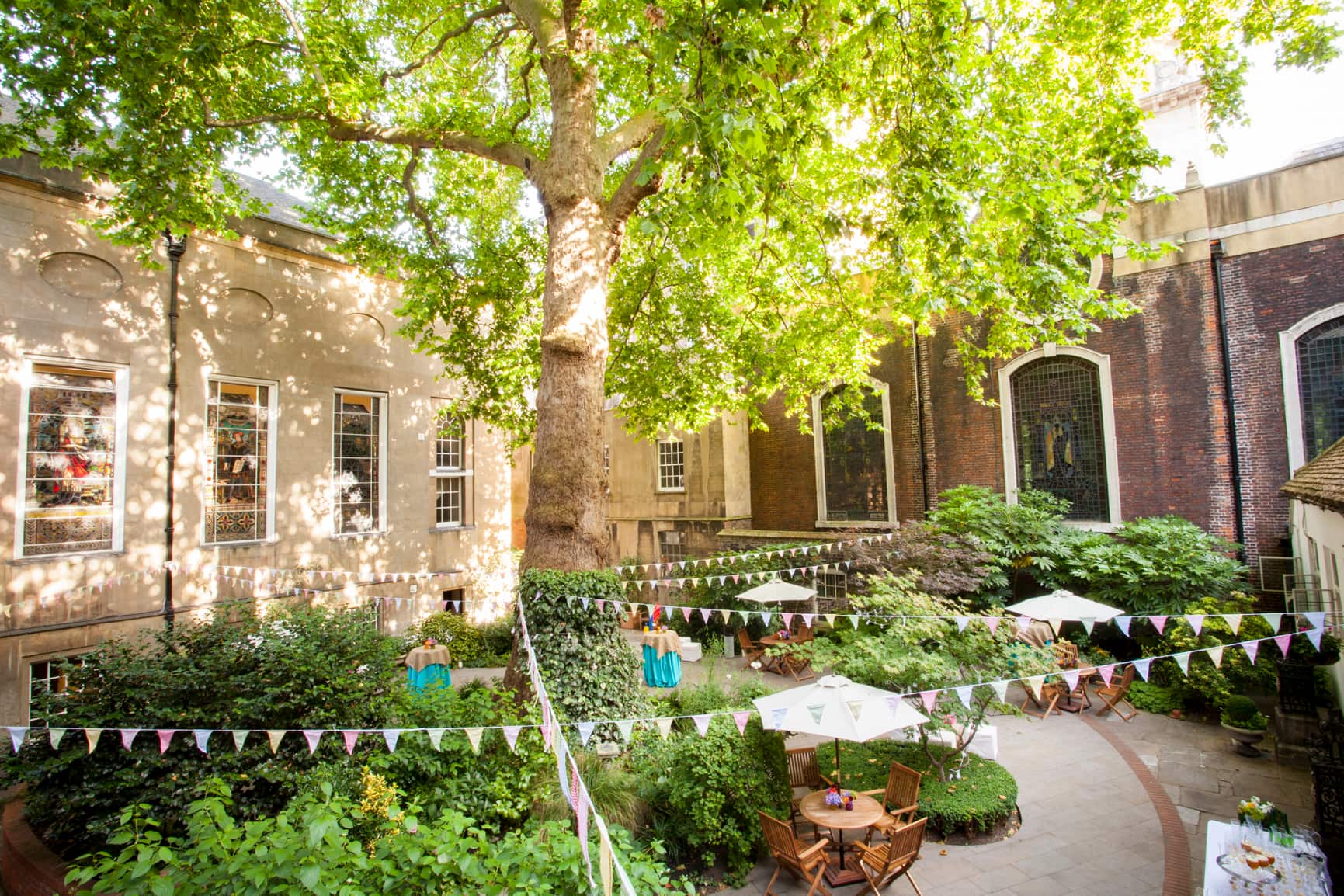
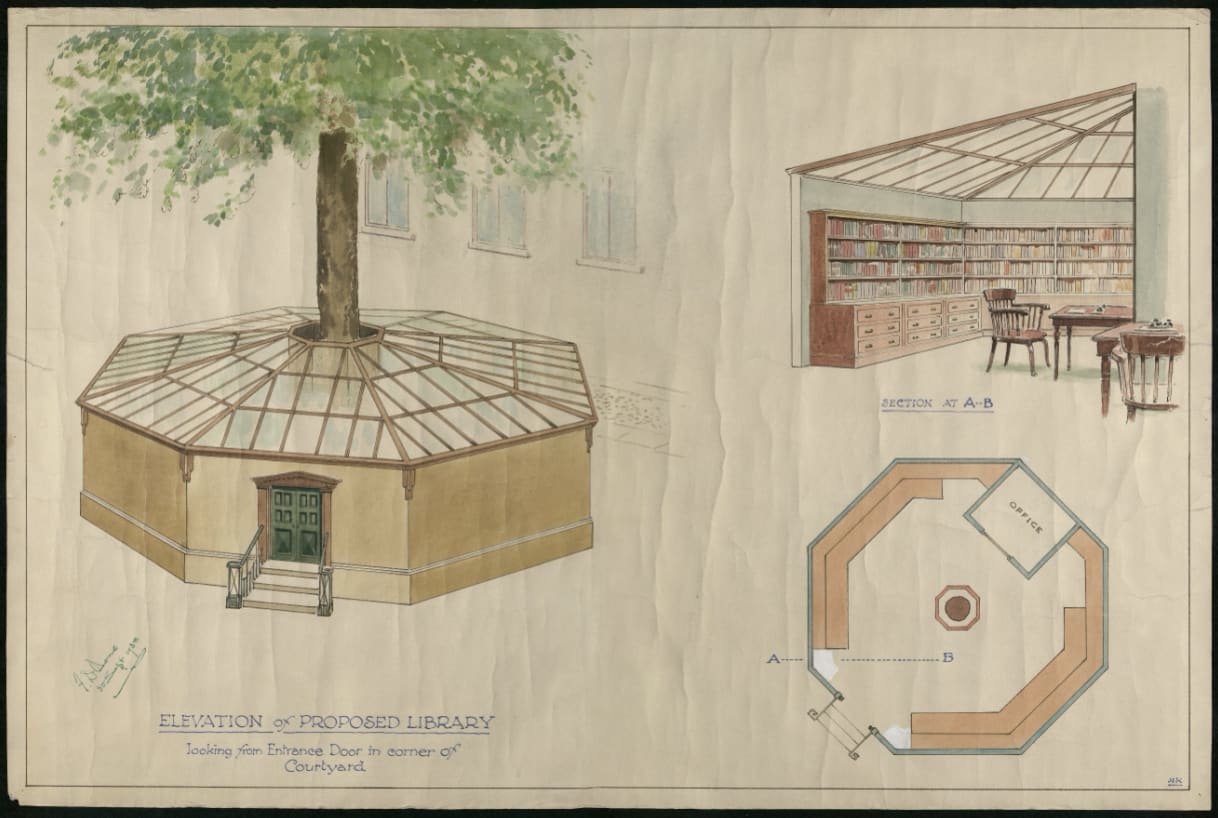
The Stationers' plane tree: In 1837, a London plane tree was planted in the garden of Stationers' Hall to celebrate Queen Victoria’s accession.
A century later, Honorary Librarian Frederick Dorling Bone created this playful design for an elevation and section of a proposed library to be built around the trunk of the tree. The plane tree is still alive and well; legend has it that it thrives on the ashes of banned books burnt in the Stationers’ garden centuries ago.
1837
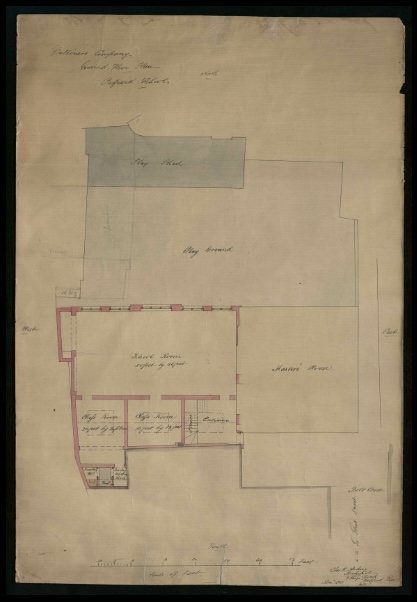
The Stationers' Company School
In 1852, the Court (governing body) of the Stationers’ Company started drawing up a scheme to establish a school ‘for educating the sons of Freemen and Liverymen of the Company’. They succeeded in opening this school on its first site, at Bolt Court, Fleet Street, in 1861.
The school was a success, and soon outgrew its premises. In 1894 it moved to a larger site in Hornsey, north London. It was transferred to Local Authority control in 1966 and closed in 1983.
1861
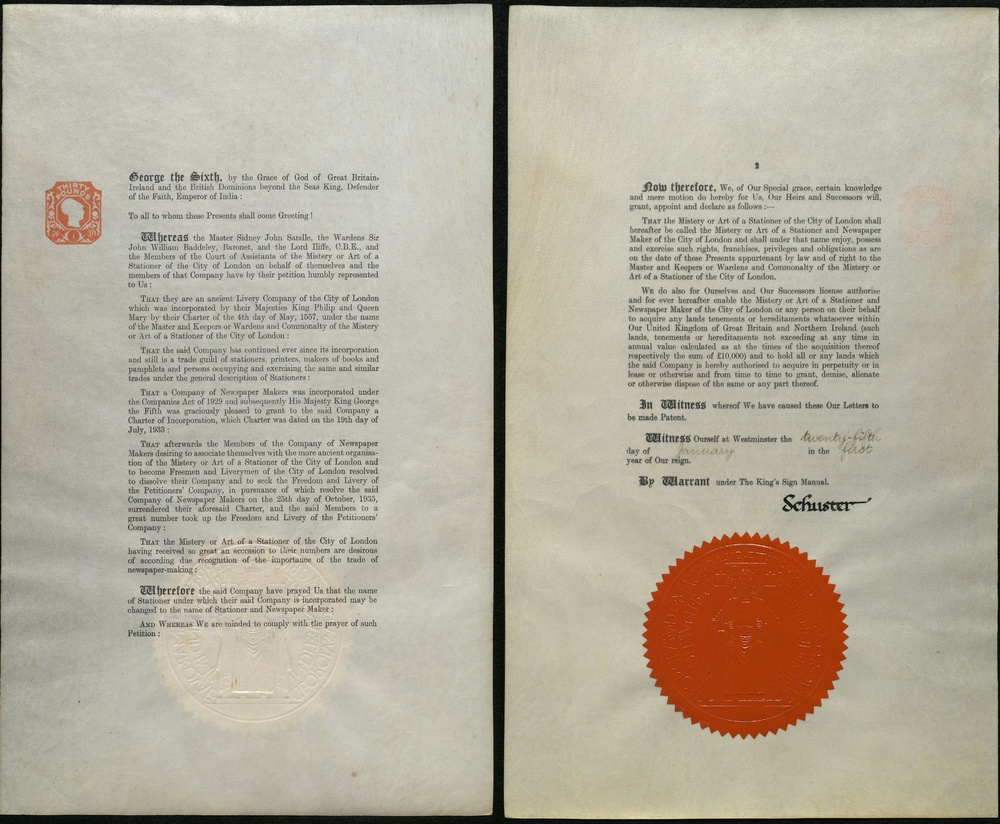
Amalgamation with Newspaper Makers: The Company of Newspaper Makers was incorporated in 1929, and received its Charter in 1933.
That same year, the Newspaper Makers voted to surrender their Charter and join forces with the Stationers. One of the conditions of the amalgamation was that Newspaper Makers were offered places in the Freedom and Livery of the new Company equivalent to those they already held. As a result, the Stationers were forced to open their Livery to women.
This image shows the royal decree of 25th January 1937 which officially registered the name of the new company as the Worshipful Company of Stationers and Newspaper Makers.
1933
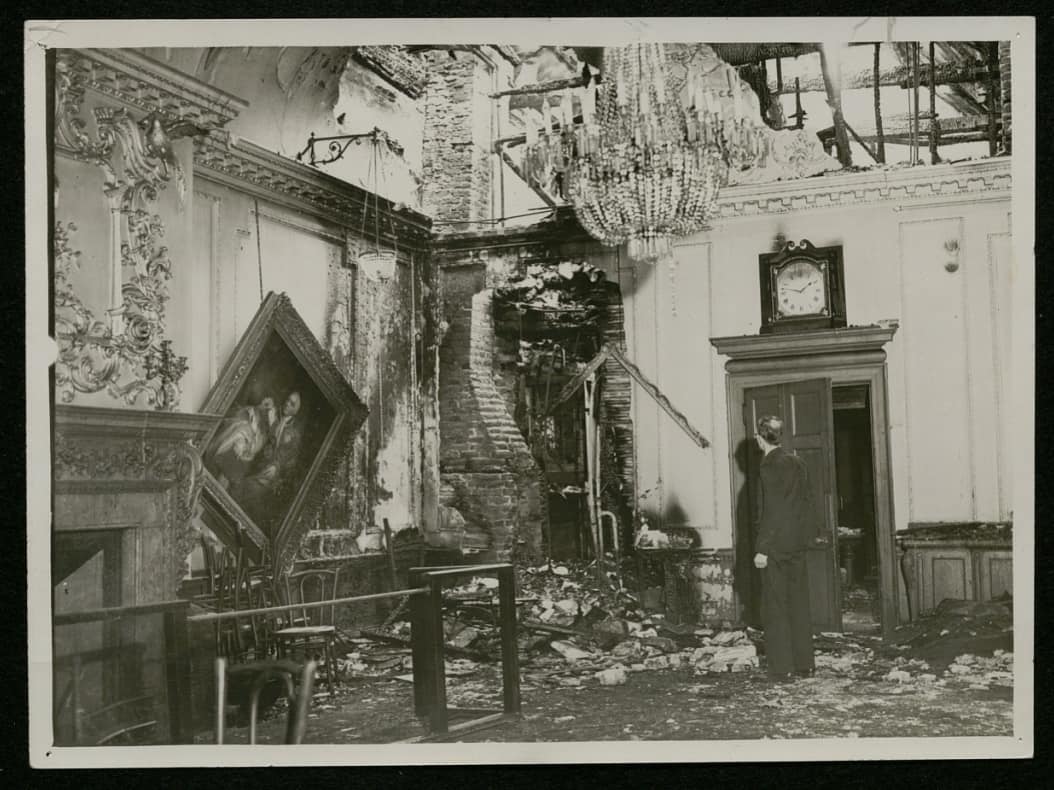
Bomb damage to Stationers’ Hall: The Blitz destroyed several buildings in the City of London, including Livery Halls.
Stationers’ Hall was lucky to survive relatively intact, but not completely unscathed: on 15 October, 1940, an incendiary bomb destroyed the roof of the Hall and Court Room.
This photograph shows Hall Keeper J. A. Price surveying the collapsed Court Room ceiling. Following another raid in December of the same year, which devastated the streets around Stationers’ Hall, the Company evacuated its most valuable fixtures and fittings to safe storage at Friar Park, a Victorian neo-gothic mansion in Henley-on-Thames owned by Lady David (later to become the home of Beatle George Harrison).
1940
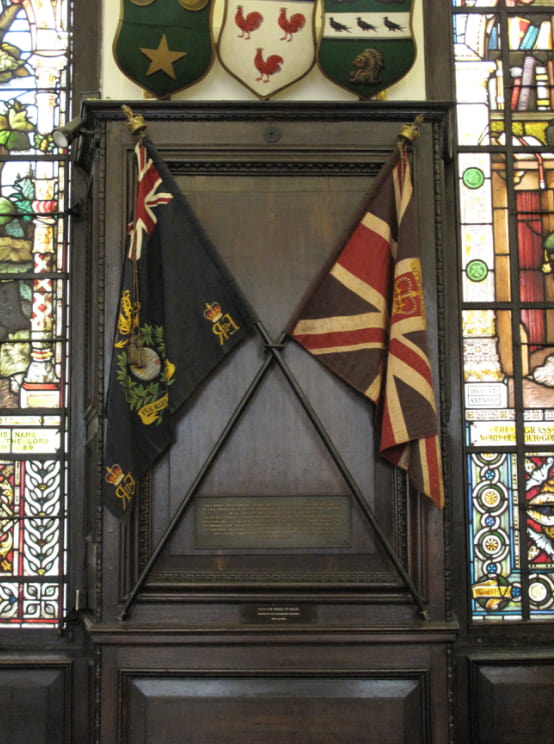
Affiliation with the Royal Marines
The Stationers’ Company adopted 45 Commando Royal Marines in 1949. H.M. Queen Elizabeth II presented new Colours to 45 Commando on 13 May 1969, and the original Colours were then presented to the Master of the Stationers’ Company by the Commanding Officer and lodged for safekeeping, with traditional ceremony, in Stationers’ Hall on 18 November 1969, in the presence of the Lord Mayor of London.
The Colours, with commemoration plaque, are sited on the panelling in the centre of the west wall of the Hall.
1949
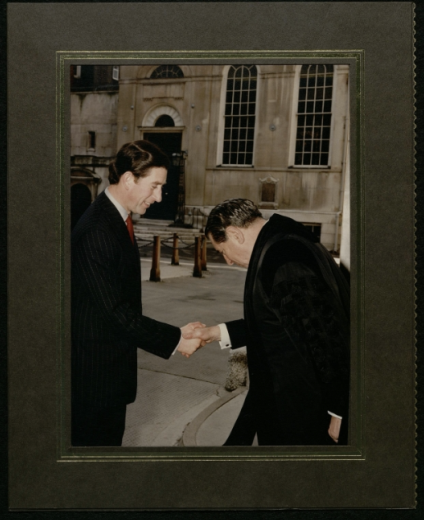
King Charles III (then Prince of Wales) made Honorary Liveryman
This photograph shows the Prince of Wales and future King Charles III being welcomed to Stationers’ Hall in 1983 by the then Clerk of the Company, Colonel Sacha Rubens, on the occasion of the Prince’s cloathing as a Liveryman of the Stationers’ Company.
1983
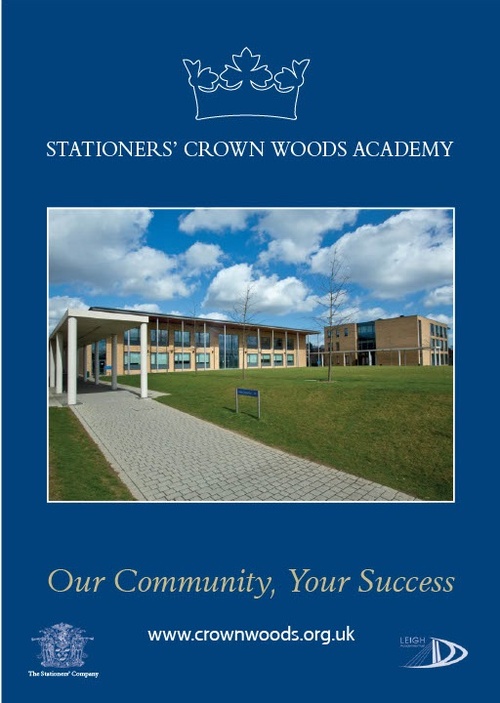
Stationer Crown Woods Academy 2014: Stationers' Crown Woods Academy opened in September 2014 when Crown Woods College became an academy and joined Leigh Academies Trust.
The Company’s most significant charitable activity since the opening of the first Stationers’ Company’s School in 1861, the Academy is one of the first schools in the UK to specialise in digital media, with a Digital Media Centre provided by the Company, and will produce generations of school leavers with an understanding of, and an interest in, the Communications and Content industries.
This image shows the first prospectus for the new academy.
2014
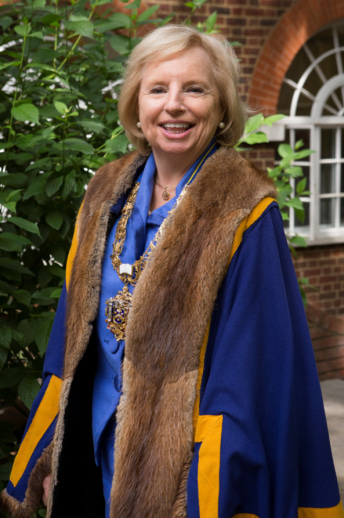
First woman Master Helen Esmonde
With a background in education and publishing, Helen Esmonde made history in 2015 when she was elected as the first woman Master of the Stationers’ Company in 612 years.
Despite the prospect of change briefly offered by the amalgamation with the Newspaper Makers, it wasn’t until the 1970s that the Company formalised the admission of women to the Livery.
2015
HM Queen Camilla made Honorary Liveryman
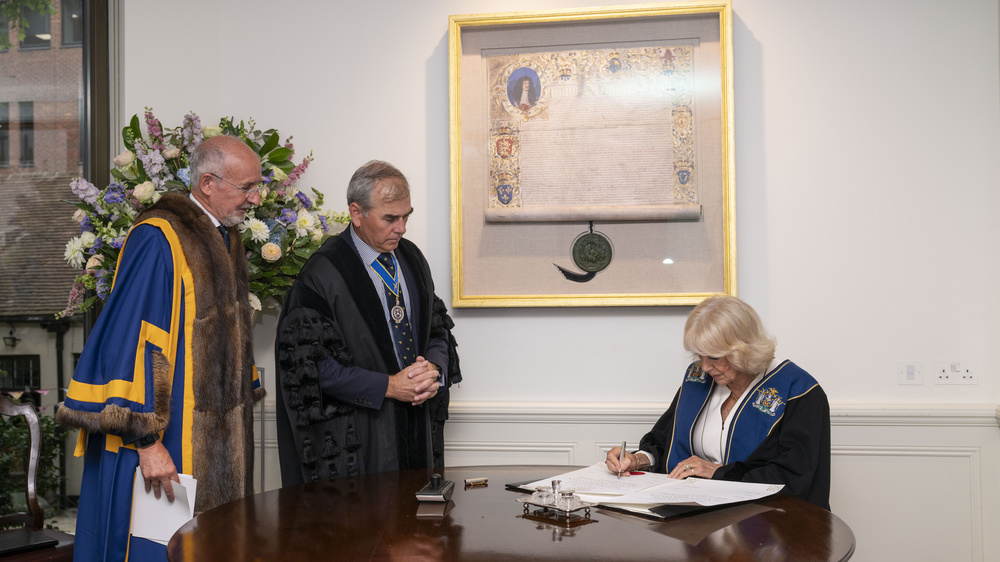
On Tuesday, 15 July 2025 Her Majesty Queen Camilla was cloathed by the Master as an Honorary Freeman and Liveryman of the Worshipful Company of Stationers and Newspaper Makers, in recognition of her dedication to promoting literacy.
This photograph shows her signing the Freemen’s Register in the company of the Master Doug Wills and the Clerk Giles Fagan.
2025