Stationers’ Company sees one of just three surviving copies of Tyndale’s New Testament

Date:
12th October 2026
Tags:
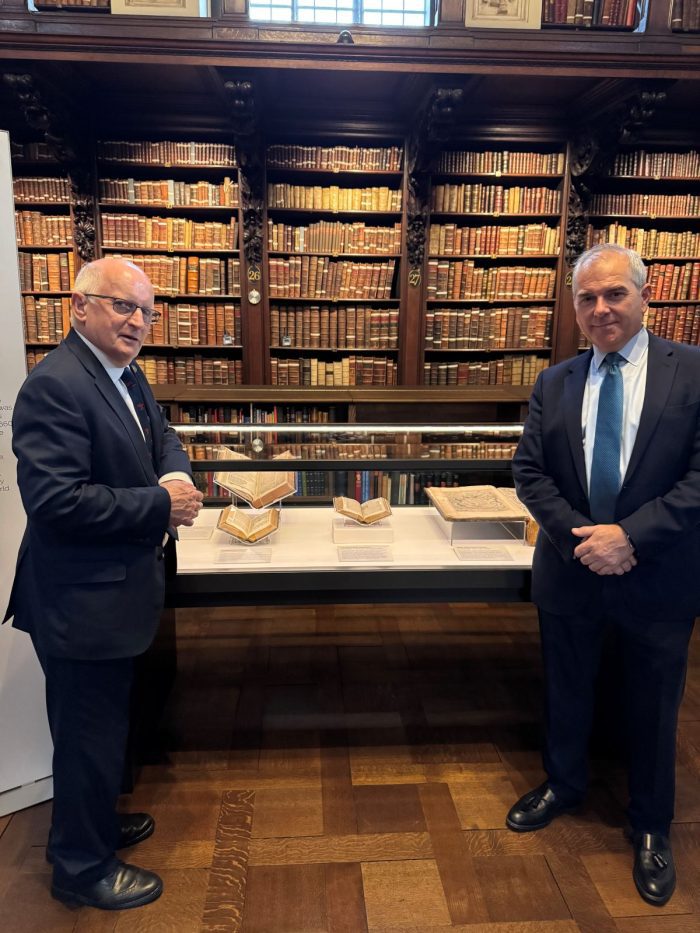
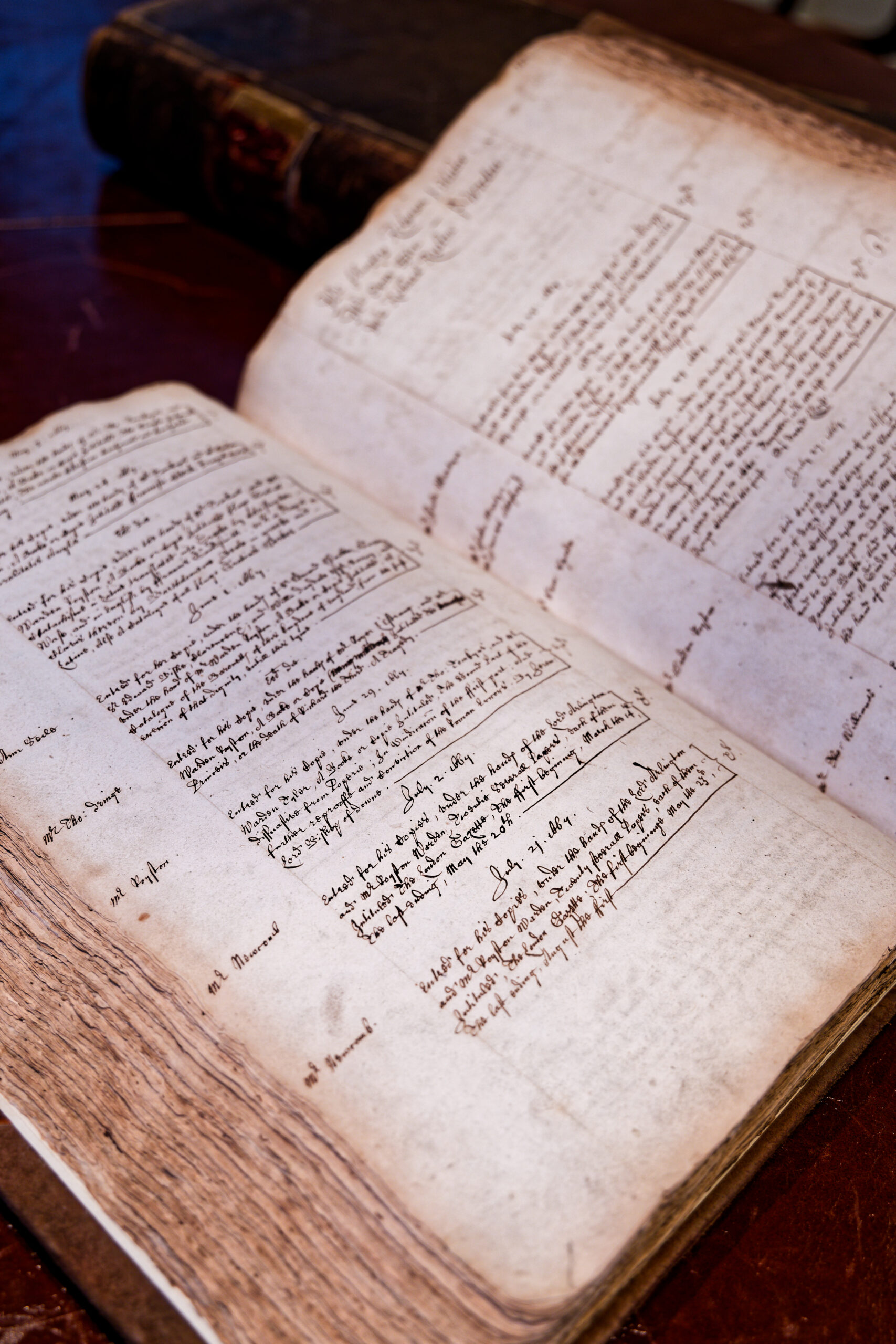
Two leaders of the Stationers’ Company spent Tuesday evening with one of the most remarkable books in the English language: a first edition of William Tyndale’s New Testament, which is 500 years old this year.
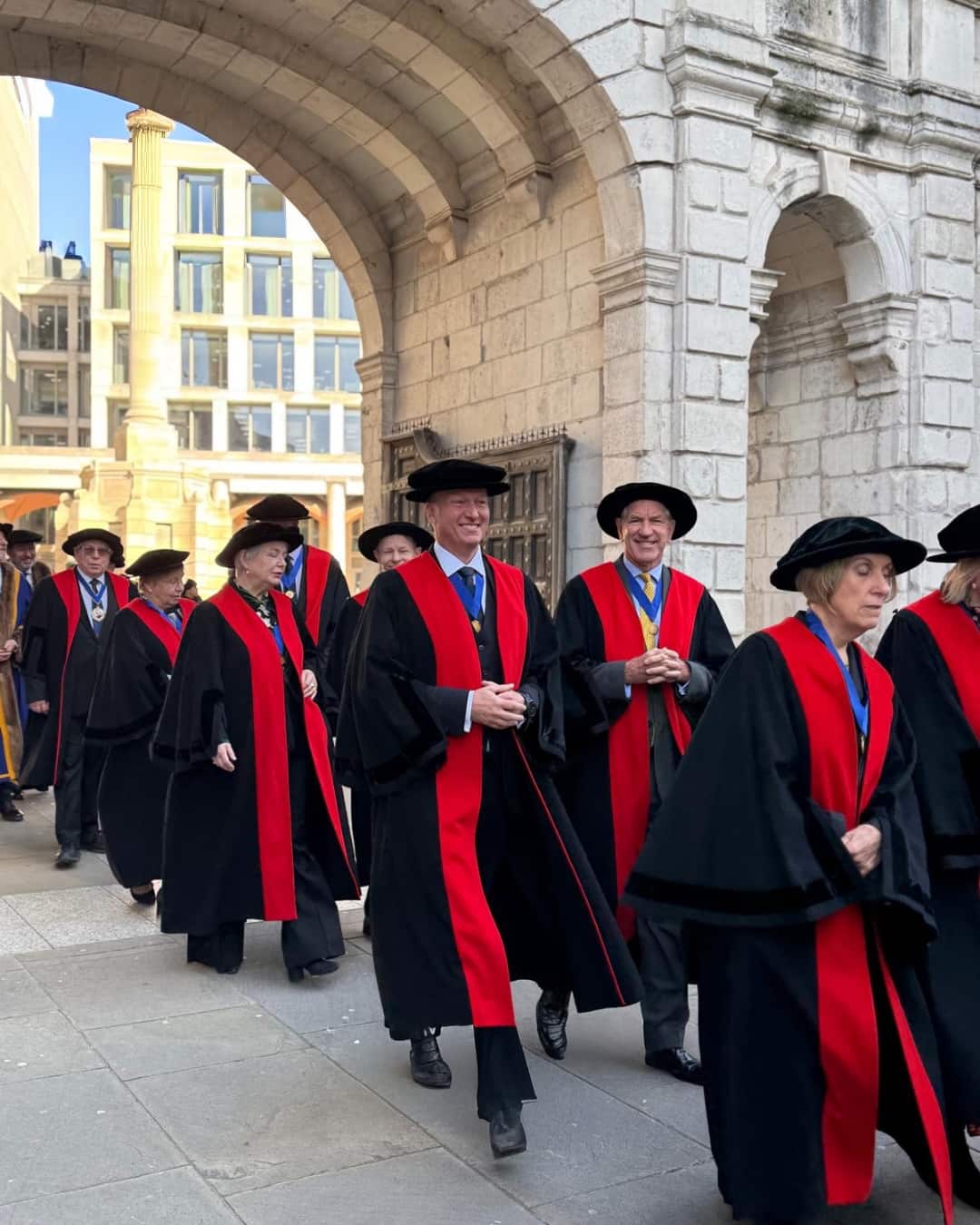
The Master, Ian Leggett, and the Clerk, Giles Fagan, were invited to a private viewing at the Wren Library in St Paul’s Cathedral. For a livery company with it’s its roots in the book trade, this visit held particular significance.
The book is the first holy book printed in English, one of only three surviving copies in the world.
Before Tyndale’s translation, the Latin Vulgate dominated authorised Scripture in England. English translations faced severe restrictions, but Tyndale, an Oxford-educated priest, believed people should be able to read the Bible in their own language.
Working abroad, he had his New Testament printed on the Continent and copies smuggled into England to be read in secret. Those the authorities found were burned, many of them at St Paul’s Churchyard itself, in a campaign led by the Bishop of London.
Tyndale was eventually betrayed to the imperial authorities in Brussels. After more than 400 days in captivity he was condemned as a heretic, and executed near the city in 1536.
The Cathedral’s own copy arrived in 1710, its importance unrecognised. The pages had been deliberately shuffled to disguise the contents and were put back in order when the book was rebound in the 19th century.
It now rests in the cathedral where so many copies were destroyed, a fact that St Paul’s says makes the treasured book “particularly defiant.”
Wycliffe Bible Translators, a charity, says Tyndale’s impact on the development of English was at least as great as Shakespeare’s. 80% of the King James New Testament of 1611 uses Tyndale’s translation.
Phrases still in use today such as “the salt of the earth”, “eat, drink and be merry”, “the apple of his eye” and “go the extra mile” reflect his lasting contribution to English.
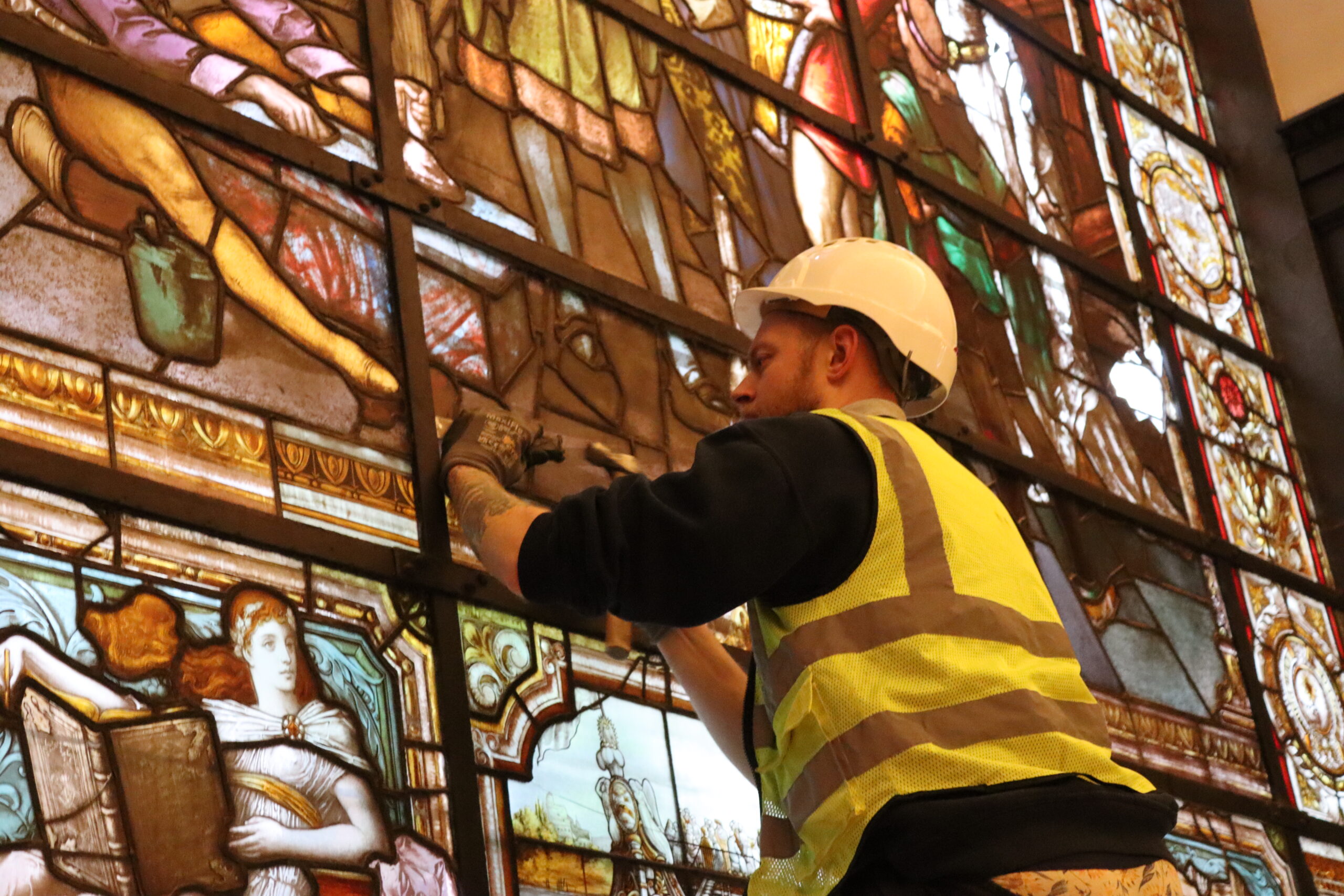
Our home, Stationers’ Hall, has strong links to Tyndale, Shakespeare and the King James Bible; Tyndale and Shakespeare being recognised within stained glass windows at Stationers’ Hall.
Tyndale’s prayer that “God would open the King of England’s eyes” was answered within three years, when Henry VIII authorised the “Great Bible” in 1539. It was largely Tyndale’s work, completed by Miles Coverdale and others.
St Paul’s Cathedral is marking the anniversary with an exhibition, A Dangerous Calling: 500 Years of William Tyndale’s New Testament, which opened on 5 June and runs until February 2027.
Latest News
12 October 2026
Stationers’ Company sees one of just three surviving copies of Tyndale’s New Testament

12 October 2026
OPI joins Climb of Life
12 October 2026