Stationers’ Company archive evening, 2026
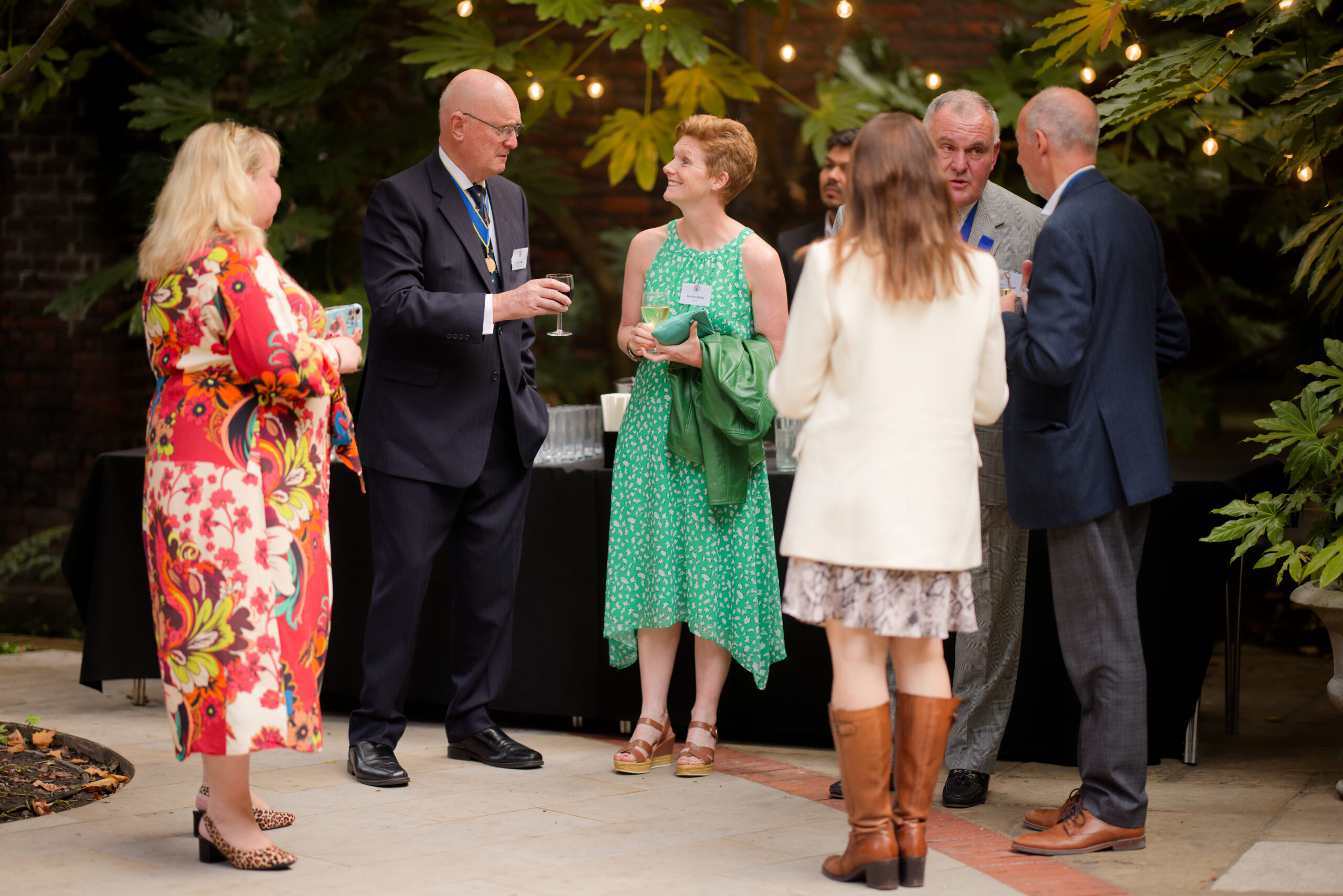
The Archives Evening took place at Stationers' Hall on 27th April 2026, offering a journey through the long and often unruly history of the printed word.

Date:
8th May 2026
Author:
Ian Mansfield
Tags:
The Archives Evening took place at Stationers’ Hall on 27th April 2026, offering a journey through the long and often unruly history of the printed word.
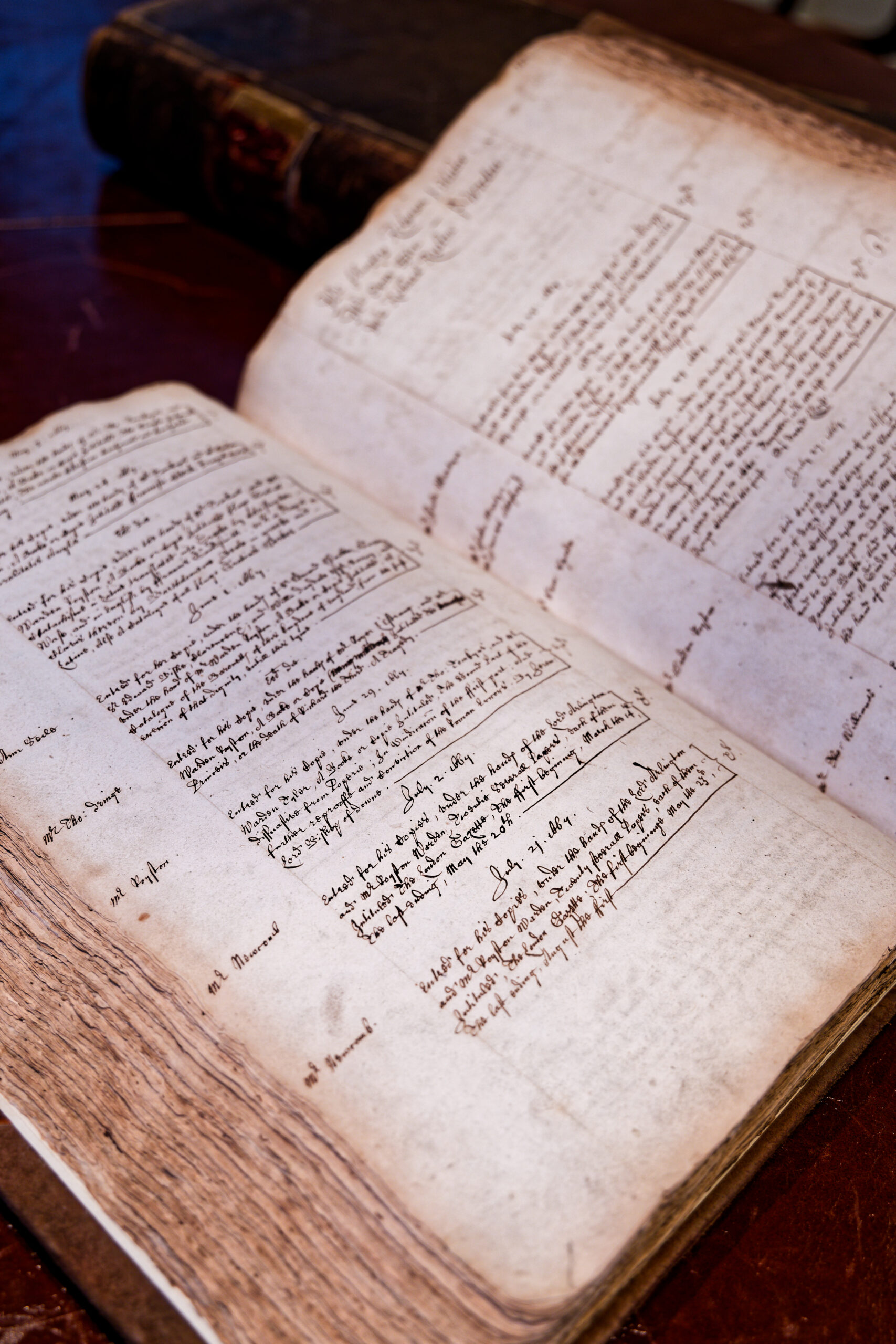
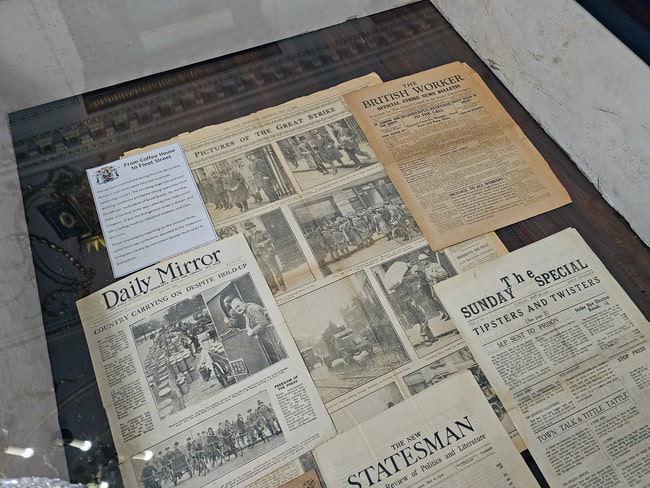
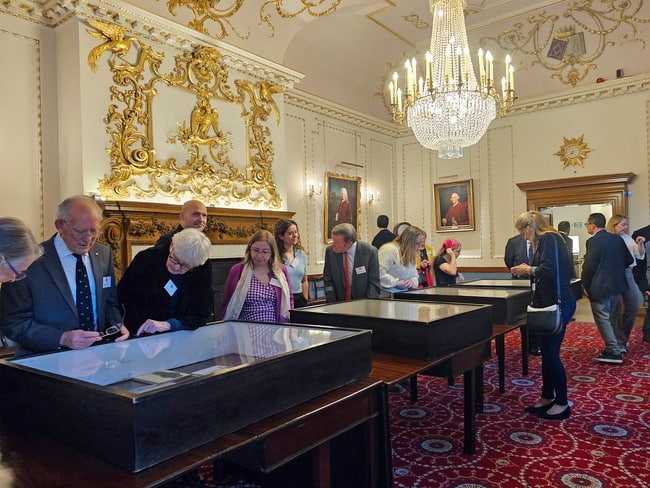
The evening opened with a display curated by archivist Dr Ruth Frendo, featuring a selection of historic newspapers and pamphlets. Front pages from titles such as The Ladies’ Mercury, The Examiner and The London Gazette were laid out alongside photographs of Fleet Street in its heyday. Among them were contemporary reports on the 1926 General Strike, a timely inclusion given its centenary.
After a welcome from the Master – complete with an anecdote about Robert Maxwell burning through £20 million on a doomed attempt to rival the Evening Standard – the formal proceedings began, moderated by Oliver Gaddesby, chair of the Library and Archives Committee.
Former Press Association editor Jonathan Grun introduced the history of Fleet Street, taking his cue from an event in 1699, when Stephen Bryan was apprenticed to Stationer Bennett Griffin. Bryan later went on to print the Worcester Postman from 1709, which is still in print today as the Berrow’s Worcester Journal.
Early publishers, he explained, faced significant constraints, not least the burden of stamp duty. It was the radical stationer Henry Hetherington who challenged this “tax on knowledge”, defiantly producing The Poor Man’s Guardian without paying the duty.
Another Stationer, John Walter, introduced the steam-powered printing press in 1814, which Jonathan noted was a mere 5 months after George Stephenson’s first steam locomotive.
And further transformation of news gathering was explored in the story of the former Master of the Stationers, Sydney Waterlow, who introduced the new telegraph to central London, but so objected to paying for the right to bury the cables under the road that he strung them over the tops of buildings.
As Jonathan explained, these forward-thinking entrepreneurial newspaper makers were a far cry from the stationers of old. The likes of Alfred Harmsworth of the Daily Mail, pandering to their readers with garish headlines and publicity stunts.
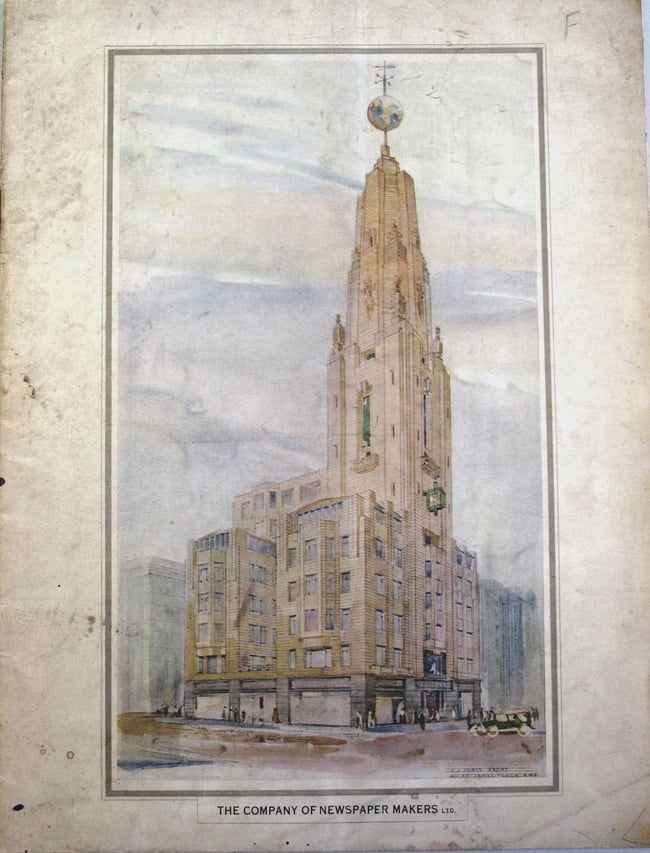
Jonathan jumped to 1931, explaining how the journalists clubbed together to form the Newspaper Makers Guild, and proposed to build a Livery Hall of their own – a near skyscraper of a building which would be a major landmark today.
In the end, they merged with the Stationers and formed the modern-day Livery Company – and introduced our first lady liverymen.
There was Emily Peacock, the first woman reporter on the Daily Express and Betty Ross, an American journalist from the newspaper markers, and Pippa Woodman from the Stationers.
Jonathan closed by returning to his opening anecdote. More than two centuries after Stephen Bryan’s apprenticeship, Harry Godfrey Davie – editor of the paper Bryan founded – arrived at Stationers’ Hall to join the Company, neatly tying past and present together.
If the first talk focused on newspapers, the second, by Dr Margarette Lincoln, shifted attention to the mass-market fiction that helped sustain them.
In an era when taxes still constrained publishing, cheap serialised stories, later dubbed penny dreadfuls, proved hugely popular. Titles such as Lives of the Most Notorious Highwaymen, Footpads, and Murderers were printed in weekly instalments, sometimes ending mid-sentence to entice readers back the following week.
Spurred on by improvements in the speed of printing and the falling price of paper, these cheap weeklies were a huge hit – and thanks to their gruesome writings, a cause of moral panic amongst the upper classes.
However, as Dr Lincoln explained, it was the tightening of copyright in 1842 that spurred the publication of these weeklies, as publishers could no longer pirate fake versions of popular novels.
Driven by faster presses and cheaper paper, these publications flooded the market. Their lurid tales of crime and adventure sparked widespread concern among the middle and upper classes, even as they sold in vast numbers. The tightening of copyright law in 1842, which curtailed the piracy of established novels, only accelerated their rise.
For a penny versus a shilling for Charles Dickens, it was an easy choice for many readers. Dr Lincoln said that by the mid-19th century, London was awash with stories of highwaymen, pirates and schoolyard mischief. Their cultural impact was profound—so much so that tales circulated of thrill-seekers venturing onto Hounslow Heath in the hope of encountering the kinds of romanticised robbers depicted in print.
There were stories for girls as well as boys, and Dr Lincoln produced examples of posters that could be displayed in shop windows to promote the weeklies to passers-by.
The moral panic led to changes though, and spurred the free public libraries movement to provide more wholesome reading material to the poor. Although, as Dr Lincoln noted, some of the most popular books to be taken out were the penny dreadfuls!
Despite the controversy, Dr Lincoln concluded that penny dreadfuls left a lasting mark, embedding vampires, villains, and dashing anti-heroes into popular culture.
Having heard about Fleet Street through what it published, it was London tour guide Ross Hamilton to end the evening with a vicarious walk down the street of shame itself.
Starting with Elizabeth Mallet, who founded the Daily Courant in 1872 – using the money she and her husband earned printing the last words of the condemned to die at the gallows. Although, as he noted, on occasion, printing them before the person had actually died.
Accuracy, it seems, has long been negotiable.
One of the founding fathers of the newspaper guild, Edgar Wallace, whose memorial can be found at Ludgate Circus, was described as the most famous writer no one has heard of. It’s the newspaper barons that most people have heard of, and Ross took time to point out that the Daily Express’s famous art deco building earned the nickname of the Black Lubyanka, despite not looking anything like its Soviet namesake.
A quick trot through some other Fleet Street papers short-lived and otherwise, such as The Workers Dreadnaught, founded by the former suffragette Sylvia Pankhurst, who ended in jail for one of her front covers.
One of the last to survive on Fleet Street was the headquarters of Scottish publisher DC Thomson. Ross recalled teasing passengers on open-top bus tours by declaring that no journalists remained on the street, which often prompted an indignant response from an office window.
Guests were also presented with replicas of the early prospectus for the Newspaper Makers Guild’s new livery hall – a copy of which is in the Stationers’ archive.
Latest News
16 October 2026
Updates from Leigh Stationers’ Academy

15 October 2026
The Imagination Exchange: Where words and imaginations meet.
14 October 2026